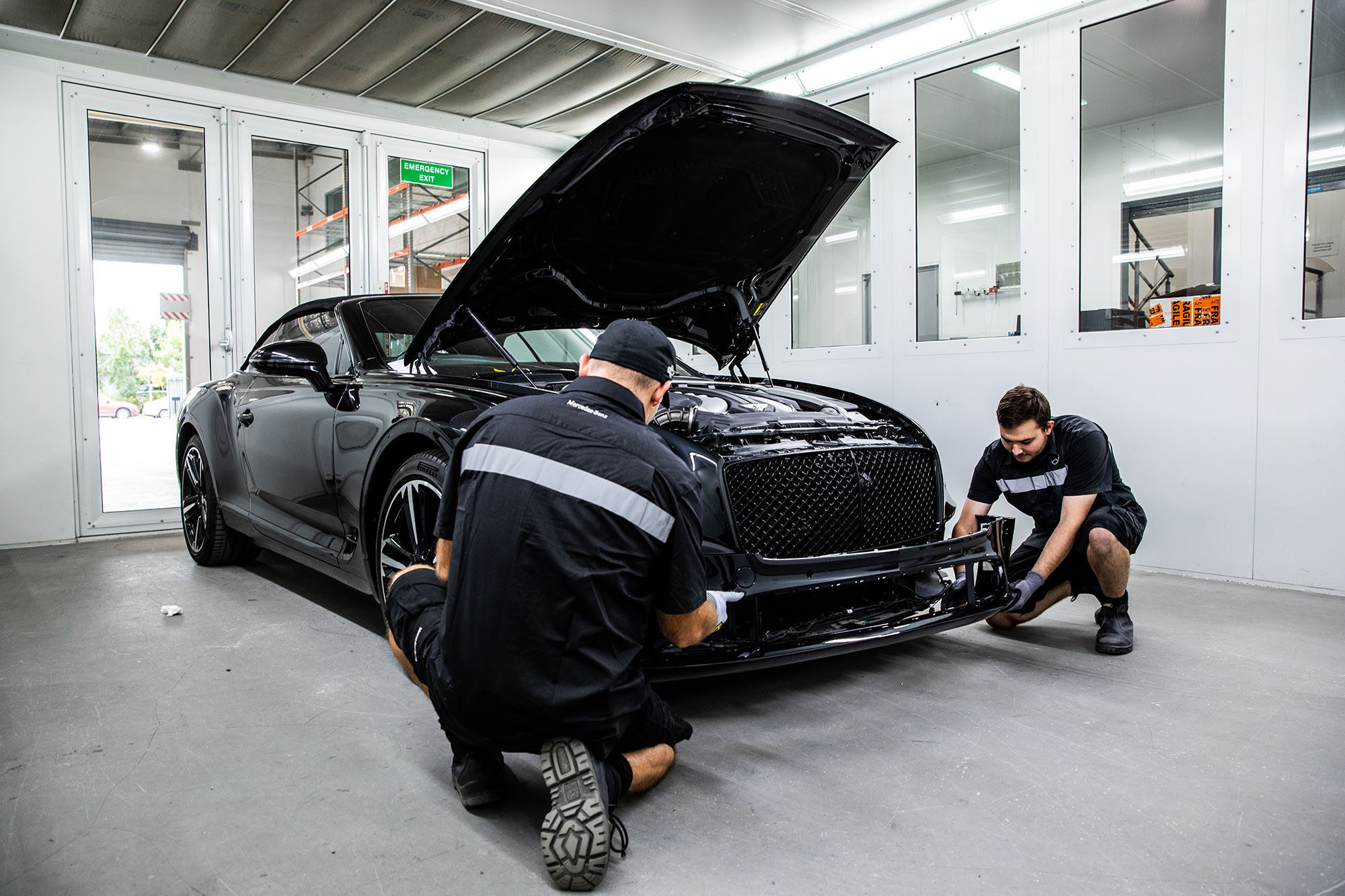



At AMA Prestige, we specialise in the restoration and collision repair of the world’s most advanced luxury, electric, and high-performance vehicles. From OEM-certified structural work to precision ADAS calibration, our network—including facilities like Shipstone in Brisbane and H Harvey’s on the Gold Coast—is dedicated to returning your vehicle to its pre-accident condition with uncompromising accuracy.
Understanding the True Cost of Luxury Collision Repair
You’ve likely heard the stories or perhaps experienced the shock yourself: a seemingly minor parking lot scrape on a luxury SUV results in a quote that rivals the price of a small hatchback. It is easy to dismiss these figures as inflated, but the reality of modern automotive engineering is far more complex. When you review a luxury car repair cost breakdown following a collision, you aren’t just paying for a technician’s time or a replacement bumper; you are investing in the preservation of the vehicle’s safety rating, structural integrity, and resale value.
Repairing a mass-market vehicle is often a transaction focused on speed and economy. Repairing a Porsche, Tesla, or Audi is a process of reconstruction that demands adherence to strict factory standards. Luxury manufacturers operate in a tightly controlled ecosystem where proprietary tools, specific bonding agents, and rigorous training protocols dictate exactly how a car must be fixed. This control ensures that the vehicle reacts exactly as designed if it is ever involved in another accident. Below, we dissect the specific factors that drive the costs of restoring high-end vehicles.
The Material Difference: Why Aluminum and Carbon Fibre Cost More
One of the most significant contributors to a repair bill is the composition of the vehicle itself. Decades ago, most cars were built primarily from mild steel, which was relatively easy to hammer back into shape or weld. Today’s luxury fleet utilises a complex mix of exotic materials designed to reduce weight while increasing strength.
Modern European and electric vehicles extensively use aluminium, ultra-high-strength steel (UHSS), and carbon fibre. Unlike mild steel, aluminium cannot simply be reshaped with force; it often requires replacement or specialised heat-treatment techniques to avoid cracking. Furthermore, aluminium components cannot be welded using standard equipment due to the risk of galvanic corrosion and heat distortion. They require dedicated clean rooms and specific riveting and bonding tools.
This complexity is whyexpert aluminium vehicle repairs for luxury cars command a higher price point. The facility must invest in isolation bays to prevent cross-contamination with steel dust, which can cause rust on aluminium panels. When you see “structural materials” on your invoice, you are paying for the advanced metallurgy that keeps you safe, and the specialised science required to restore it.
The Technology Tax: ADAS and Electronic Integration
In the past, a bumper was simply a piece of plastic meant to absorb minor impacts. On a modern Mercedes-Benz or BMW, the bumper is a sophisticated sensor array. It houses parking sensors, radar units for adaptive cruise control, cameras for 360-degree visibility, and sometimes even pedestrian safety airbags. A minor impact that looks like a cosmetic scratch can easily misalign these sensitive instruments.
This brings us to one of the most critical, yet often invisible, line items in a luxury car repair cost breakdown: calibration. Once a sensor is disturbed or a windshield is replaced, the vehicle’s Advanced Driver Assistance Systems (ADAS) must be recalibrated to factory tolerances. If a radar sensor is off by even a fraction of a degree, the car’s automatic braking system may fail to detect an obstacle or engage incorrectly.
We prioritise ADAS calibration expertise because it is a matter of life safety. This process requires expensive digital targeting systems, large, specifically lit bays, and factory software that connects directly to the manufacturer’s server. You aren’t just paying to fix the dent; you are paying to ensure the car’s “eyes” and “brain” are talking to each other correctly again. For more on the importance of safety systems, organisations like ANCAP highlight how integral these technologies are to modern vehicle safety ratings.
The Paint Process: Replicating Perfection
Luxury vehicles are defined by their finish. The deep lustre of a Range Rover or the matte finish of a customised AMG requires a refinishing process that goes far beyond standard body shop practices. A significant portion of your repair estimate is dedicated to paint labour and materials.
High-end manufacturers often use tri-coat pearl effects, tinted clear coats, or matte finishes that are notoriously difficult to match. A standard repair might involve painting just the damaged door, but in the luxury world, this often results in a visible colour mismatch. To guarantee a seamless result, technicians must blend the new paint into adjacent panels—the fender and the rear door—tricking the eye so the repair is undetectable.
Furthermore, the paint itself is water-borne and eco-friendly, requiring specific humidity-controlled spray booths and curing ovens. Our approach to luxury paint refinishing ensures that the texture (orange peel), gloss, and metallic flake orientation match the factory finish perfectly. This prevents the vehicle’s value from diminishing due to obvious repair work.
Parts Strategy: The Non-Negotiable Need for OEM
When reviewing your estimate, the “parts” section is often the largest expense. In the collision repair industry, there is a constant debate between Original Equipment Manufacturer (OEM) parts and aftermarket or “copy” parts. For mass-market daily drivers, insurance companies may push for aftermarket parts to save costs. However, for prestige vehicles, OEM parts are frequently the only safe option.
OEM parts are made by the same manufacturer that built your vehicle. They are crash-tested and guaranteed to fit perfectly. Aftermarket structural parts may not crush or transfer energy in the same way during a subsequent accident, potentially compromising the safety cell of the vehicle. Additionally, luxury brands often have tight tolerances for panel gaps (shut lines). An aftermarket hood or fender might leave uneven gaps that scream “repaired vehicle,” instantly lowering your car’s resale value.
At AMA Prestige, we advocate for the use of genuine parts to maintain the vehicle’s warranty and integrity. While this increases the upfront cost, it is an investment in the vehicle’s longevity. Using non-approved parts can void manufacturer corrosion warranties and, in the case of leased vehicles, lead to hefty penalties upon return.
The Specialist’s Fee: Certified Labour vs. General Labour
Perhaps the most misunderstood aspect of the bill is the labour rate. Why does a certified luxury repairer charge more per hour than a local generalist? The answer lies in the immense investment required to achieve and maintain “Certified” status.
Luxury manufacturers like Tesla, Porsche, and BMW do not sell structural parts to just anyone. They restrict access to shops that have undergone their rigorous training programs. A technician at a centre like Shipstone has spent hundreds of hours in factory training, learning the specific bonding rivets, welding temperatures, and disassembly procedures for specific models.
This is the difference between a general practitioner and a neurosurgeon. A general panel beater may guess how to dismantle a complex EV battery cooling system, whereas a certified technician has the schematics and training to do it safely. You are paying for risk mitigation. A mistake during the disassembly of a high-voltage EV can be fatal or catastrophic to the car’s electronics. For deep insights into industry training standards, I-CAR Australia outlines the rigorous path technicians take to reach Platinum status.
The Hidden Diagnostic and Administrative Costs
A comprehensive luxury car repair cost breakdown will also include items listed as “Pre- and Post-Repair Scans” or “Blueprinting.” Before a single bolt is turned, the vehicle must be digitally scanned to identify fault codes that aren’t visible to the naked eye. A seatbelt pre-tensioner might have fired, or a steering column sensor might have collapsed internally.
“Blueprinting” is the process of completely dismantling the damaged area to find every broken clip and bracket before ordering parts. This prevents delays later in the process. While this adds labour hours to the front end of the job, it ensures accurate ordering and a faster overall turnaround. Skipping this step often leads to “supplemental” bills later, where the shop calls to say they found more damage—a situation we strive to avoid through thorough initial analysis.
Why Cheap Repairs Are the Most Expensive
Ultimately, the goal of a luxury repair is to erase the accident from the vehicle’s history—physically and aesthetically. A cheap repair often leaves evidence: mismatched paint, uneven gaps, wind noise, or warning lights on the dashboard. When it comes time to trade in or sell your vehicle, savvy buyers and inspectors will spot these flaws immediately, leading to a depreciation hit that far exceeds the money “saved” on the repair.By choosing a facility dedicated to precision panel and structural repairs, you are protecting your asset. The breakdown of costs—covering exotic materials, digital calibration, proprietary parts, and certified expertise—reflects the incredible complexity of the machine you drive. Owning a luxury vehicle is a commitment to excellence, and restoring it after a collision requires a certified repair partner who shares that standard.